
Learning from the field: Our visit to ARROWS, Peace Winds Japan's flying medical team
On November 20, 21 program associates of the Primary Course visited Peace Winds Japan, an NGO based in Jinseki Kogen, Hiroshima Prefecture. We had the privilege of visiting ARROWS, their medical-centered emergency disaster response project team.
Warehouse visit
We began with a tour of the ARROWS warehouse, where emergency relief supplies and equipment are stored. Participants saw how the team prepares and maintains their storage items in peacetime, so that it can mobilize quickly after a disaster.
Lectures on real-world operations
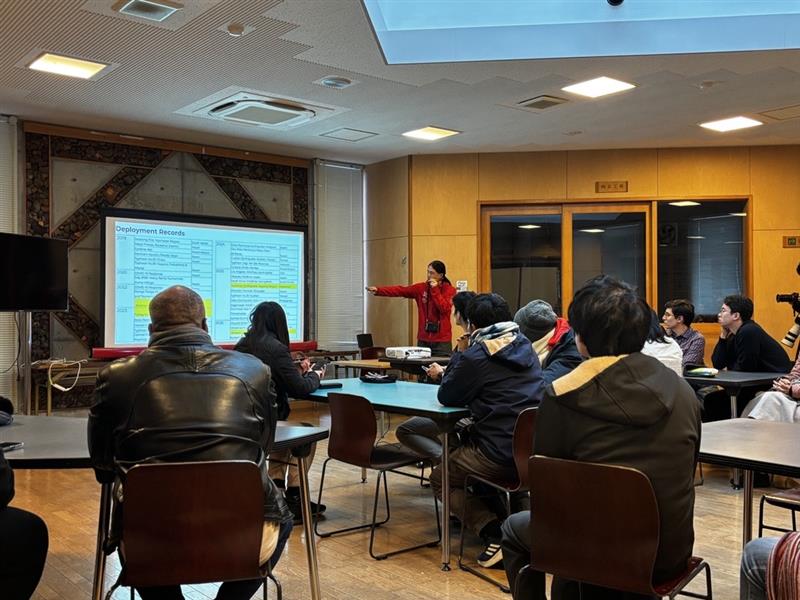
Dr. Inaba, project leader, and Mr. Futsuki, logistician, then walked us through the full process of an emergency response, from the onset of a disaster to the end of operations. They used two recent cases: the Venezuela earthquake in June 2026, and the Kumamoto earthquake in July 2026. Participants learned that each operation was built on a clear structure and through close coordination with partner organizations.
The speakers also organized these cases into four phases: Coordination, Cooperation, Collaboration and Friendly Competition with Flexibility. They explained the concrete activities in each phase with photos from the field. We also heard about the rules and initiatives that protect the safety and physical and mental health of staff. This gave participants a chance to reflect on a key point: to sustain support for others, responders must first be protected themselves.
Heliport visit
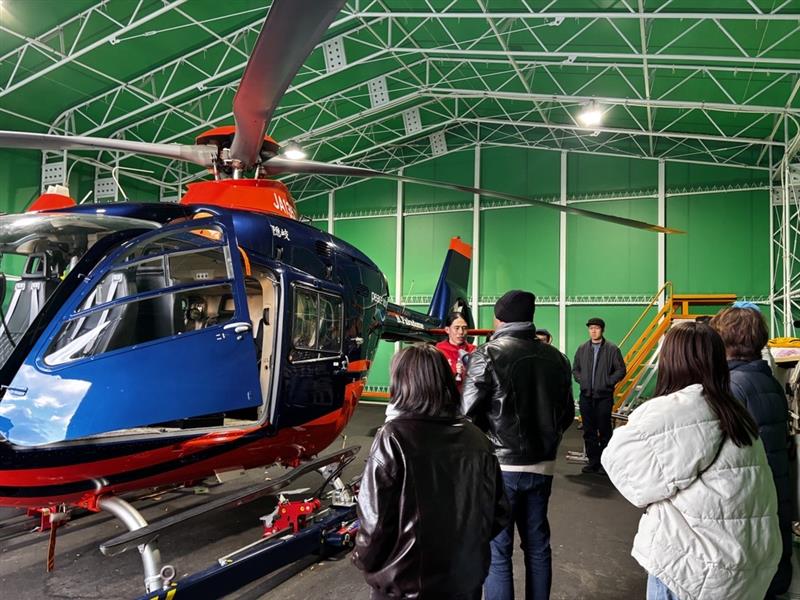
Our last stop was the heliport, the base that enables rapid deployment in domestic disasters. Participants expressed deep respect and admiration for the team’s work.
“Chaos” at the disaster site
One word kept coming up: chaos. After a disaster, information, people and supplies are all in flux, and even well-meant aid can make things worse. ARROWS’ guiding principles are therefore simple: do not add to the chaos, and do not create new problems through the response itself. The key, the team said, is to grasp the situation quickly and agree on common procedures with partners.
Through this experience, we deepened our understanding of the importance of working with diverse actors, including government, local authorities, and the private sector. What we learned during this field trip gave program associates new insights into the humanitarian sector, which will benefit them when they return to their work in their home country and organization.
Thank you to everyone at Peace Winds Japan for giving us your valuable time and for sharing your experience with our Primary Course program associates.